
April 2026 marks three years since conflict erupted in Sudan, triggering what is now widely recognised as the world’s largest humanitarian crisis. What began as a power struggle in April 2023 has spiralled into a nationwide catastrophe, devastating communities, collapsing essential services, and leaving millions of children fighting simply to survive. Aid agencies have been unable to access the thousands of people in desperate need of their help. Health care has collapsed and diseases are spreading.
Today, the scale of need is staggering. According to the UN Office for the Coordination of Humanitarian Affairs (OCHA), around 34 million people – nearly three quarters of the population – need urgent help. Over 21 million face acute food insecurity – and Darfur is hardest hit of all. Children face starvation.
More than 13 million people have been forced from their homes, losing everything, creating the largest displacement crisis in the world.
Children are bearing the brunt of this crisis. Over 17 million children are in need today of humanitarian support (Save the Children).
Education has all but collapsed. Millions of children have been out of school for over a year, with some missing nearly 500 days of learning, one of the longest school disruptions globally (Save the Children).
At the same time, children face escalating risks of violence, exploitation, and separation from their families. Tens of thousands are now unaccompanied, while others are exposed to trafficking, child labour, and recruitment into armed groups.
For girls in particular, the dangers are acute. Widespread gender-based violence has been reported, with rape and sexual exploitation used as weapons of war.
The crisis is not only one of conflict, but of hunger. Over 21 million people are experiencing acute food insecurity, with some regions facing famine-like conditions.
Families are being pushed to unimaginable extremes, skipping meals, surviving without clean water, and fleeing repeatedly as violence spreads. Health systems have collapsed, with less than a third of facilities still functioning, and disease outbreaks such as cholera, measles and malaria are on the rise.
For women and girls, survival itself carries risk. Everyday tasks like collecting water or queuing for food can expose them to violence. Meanwhile, female-headed households, now increasingly common, are among the most food insecure.
Kids for Kids has been providing sustainable life changing projects to remote village for the past 25 years. Thanks to its network of volunteers in Darfur it continues to provide lifelines to some of the most remote and vulnerable communities. For over two decades, Kids for Kids has worked directly with villages, building long-term resilience through practical, community-led solutions. In the current crisis, that work has never been more vital.
Because it works directly with local volunteers it has been providing emergency aid to hundreds of children and their families whilst other agencies have been unable to access the region.
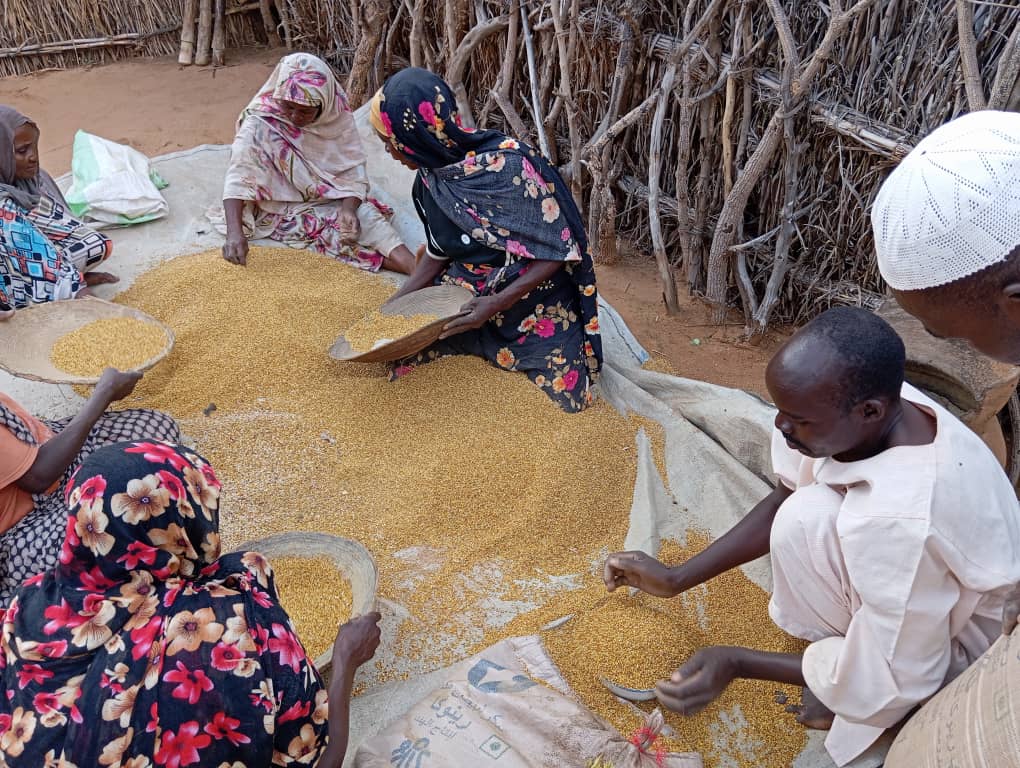
Responding to urgent need Kids for Kids has been providing Kids Kitchen Kits – food packages of vital protein, minerals and vitamins plus seeds – to families with children aged 5 and under. Additionally it has been supporting families who have been displaced who have moved to Kids for Kids’ villages.
Through goat loans, families are able to access protein-rich milk, often the only source of nutrition for young children in remote areas. This is a simple but powerful intervention in a context where malnutrition is widespread and deadly.
Kids for Kids is continuing to deliver basic necessities including food, blankets, and soap – critical for families who have lost everything through displacement and conflict.
With health systems collapsing, village midwives in every Kids for Kids village, are often the only source of medical care in rural villages. Their work is essential in reducing maternal and infant mortality. Additionally, despite immense challenges, Kids for Kids 14 Kindergartens continue to be safe learning spaces, helping children regain a sense of normality and hope, whilst schools across Sudan remain closed.
At the heart of Kids for Kids’ approach is the empowerment of women. By supporting women-led initiatives and livelihoods, the charity helps strengthen entire communities and reduce vulnerability to exploitation and hunger.
As the conflict enters its fourth year, the situation is worsening—not improving. Humanitarian needs are rising while global funding is shrinking, putting millions at risk of losing access to even the most basic support.
For the children of Sudan, this is more than a crisis, it is a lost childhood, and potentially a lost future.
Yet, amidst the devastation, Kids for Kids demonstrates that local, sustainable interventions can still make a profound difference. Kids for Kids is not only about survival today, but about rebuilding the foundations for tomorrow.
The third anniversary of the Sudan conflict is a stark reminder of the cost of inaction. Without urgent international attention and sustained support, the crisis will continue to deepen.
But there is still hope. Now, more than ever, Sudan’s children need the world not to look away.